Skip a Generation, Win the Collection: Why Corvette Gaps Are a Feature, Not a Flaw
There's a particular kind of collector anxiety that doesn't get talked about enough in the Corvette world. It's the creeping pressure to own all of it — one from every era, a tidy progression from the chrome bumpers of the C1 all the way to the mid-engine marvel that is the C8. It sounds satisfying in theory. In practice, it tends to leave collectors financially stretched, garage-space-deficient, and driving cars they don't actually love.
Here's a thought worth sitting with: what if the gap in your collection isn't a problem to solve, but an advantage to protect?
The Completionist Trap Is Real
Walk through any major Corvette show in the country and you'll meet them — collectors who've assembled every generation not because they're passionate about each one, but because the idea of an incomplete set bothers them. That's not a collecting strategy. That's a personality trait wearing a collecting strategy's clothes.
Chasing chronological completeness across eight generations means spreading your budget across an enormous range of acquisition costs, restoration needs, and storage demands. A pristine C2 coupe and a clean C5 Z06 and a driver-quality C3 and a low-mile C7 Grand Sport don't all fit in the same budget unless that budget is genuinely enormous. And even if the money's there, the time and attention required to properly maintain, insure, and enjoy four or more cars from wildly different eras is a full-time job.
The collectors who seem to get the most out of their Corvettes — the ones who actually drive them, who know them deeply, who show up at events with real stories — tend to go deep on two or three generations rather than spreading thin across the whole timeline.
Where the Real Jumps Happen
Not all generation transitions are created equal. Some represent evolutionary refinements. Others represent seismic shifts in what a Corvette actually is. If you're going to skip a generation, it pays to understand where the dramatic leaps occurred, because those gaps between non-consecutive eras are often where the most interesting contrast lives.
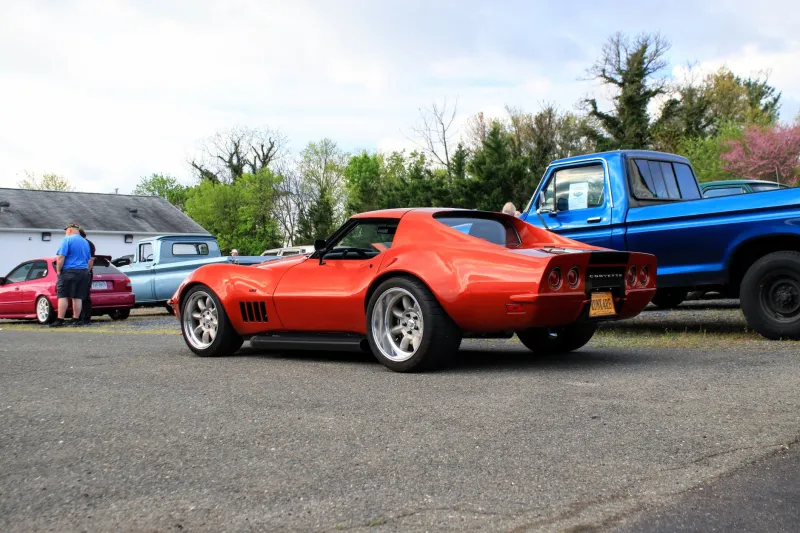
C1 to C3: The C2 is a masterpiece and plenty of collectors would fight you over that statement, but jumping from a C1 to a C3 gives you the bookends of a fascinating era — the innocent optimism of the original against the muscular, chrome-heavy excess of the late '60s and early '70s. The C2 years in between are stunning, but skipping them doesn't diminish either end of that bracket. If anything, the contrast becomes more vivid.
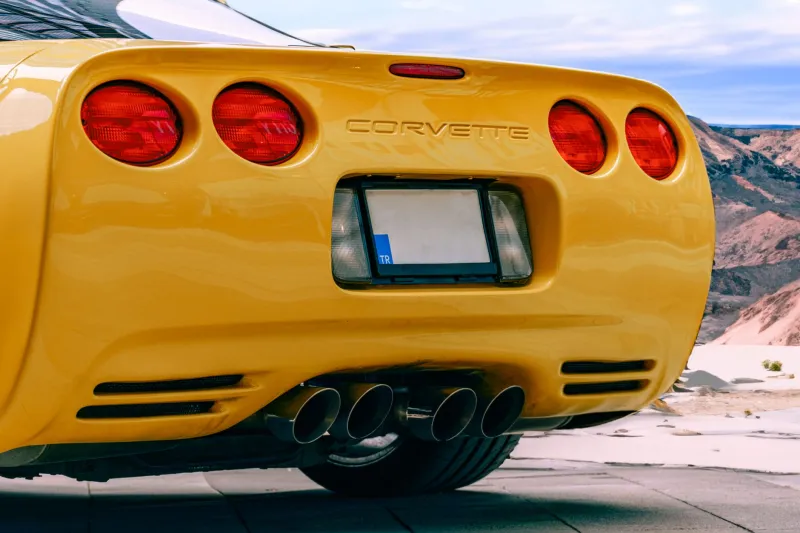
C4 to C6: The C4 era gets unfairly maligned, but there's no denying that the C5 represented a massive engineering reset. Skipping the C5 entirely and jumping from a C4 to a C6 puts you in an interesting position: you own the underdog generation and the one that perfected the platform that followed it. The C6 Z06 with its 505-horsepower LS7 is a completely different animal from even a strong C4 LT5, and the contrast is genuinely educational.
C6 to C8: This is the big one right now. The C7 is an exceptional car — arguably the last great front-engine Corvette — but the C8 represents such a fundamental rethinking of what the car is that owning both a C6 and a C8 tells a more dramatic story than C7-to-C8 ever could. You're essentially bracketing the final front-engine chapter with the beginning of a new era. That's a narrative worth owning.
The Investment Case for Strategic Gaps
Beyond the emotional and experiential argument, there's a financial logic to skipping generations that experienced collectors have quietly understood for years.
Every dollar you don't spend on a generation you're lukewarm about is a dollar available to go deeper on the ones you love. That might mean finding a better example, doing a more thorough restoration, or simply holding cash in reserve for when the right car surfaces at the right price. Patience is the most underrated tool in the collector's kit, and it's a lot easier to be patient when you're not trying to fill every slot in an eight-car lineup.
There's also a market timing element worth considering. Certain generations cycle in and out of favor, and the ones currently sitting in the valley of collector interest tend to be the ones worth watching. The C4, for example, has been dismissed as the awkward era for decades, but clean examples are quietly appreciating as the cars become legitimately vintage. A collector who owns a sharp C1 and a well-sorted C4 — skipping the C2 and C3 entirely — might look prescient in ten years.
Going Deep Instead of Wide
Some of the most respected collectors in the West Coast Corvette community have built their reputations not by owning one of everything, but by knowing everything about a specific era or two. The person who can tell you about every option code available on a 1967 Corvette, who understands the subtle differences between early and late production 1969 models, who has driven enough examples to know what a truly original car feels like — that person has something that can't be bought quickly or assembled by chasing completeness.
Focusing on two non-consecutive generations forces a kind of depth that breadth rarely produces. You learn the cars differently. You source parts with more intention. You build relationships with specialists who know your specific era cold. And when you show up at an event, you're not just displaying metal — you're demonstrating knowledge.
The Permission You Didn't Know You Needed
If you've been quietly relieved that you don't own a C4, or vaguely embarrassed that you skipped the C7 on your way to a C8, consider this your official clearance to let that go. The Corvette timeline is not a checklist. It's a menu. You're allowed to order what you actually want.
The collectors who seem most content aren't the ones who own the most generations. They're the ones who own the right ones — the cars that genuinely excite them, that connect to something personal, that they'd choose to drive on a Saturday morning just because the road looks good.
Sometimes the smartest thing you can do is leave a gap. Fill it with intention, or don't fill it at all. Either way, you'll probably enjoy the cars you have a whole lot more.