The Grassroots Network Keeping Rare Corvettes Off the Scrap Heap
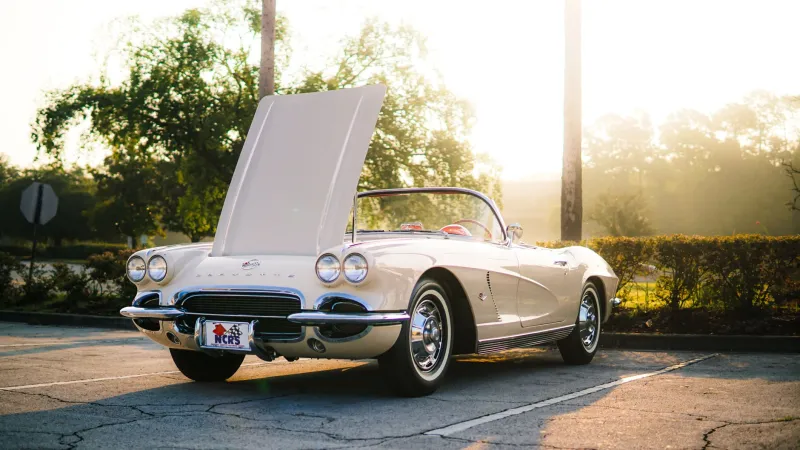
It starts with a phone call. Maybe it's a salvage yard worker who knows somebody who knows somebody. Maybe it's a family member clearing out an estate who stumbled across a dusty shape under a tarp in the back of a garage. However the tip arrives, what happens next is surprisingly well-organized for something that technically doesn't exist on paper.
Across California, Nevada, Arizona, and the broader American West, Corvette club members have spent years building informal rescue networks — webs of contacts, group chats, and regional connections that can mobilize within hours when a rare model surfaces. Nobody calls it a formal program. There's no nonprofit status, no official charter. But the results are real, and the cars being saved are genuinely irreplaceable.
When the Clubs Became the Safety Net
For decades, Corvette clubs were primarily social organizations — weekend cruises, car shows, tech sessions in somebody's driveway. That identity hasn't gone away, but something shifted as the classic car market tightened and the supply of unrestored survivors started shrinking.
"We started noticing that the cars we used to find at swap meets or through classifieds just weren't showing up anymore," says Mike Trevino, a longtime member of a Central Valley-based club with over 200 members. "Either they were already gone, or they were going straight from someone's property to a crusher because the owner didn't know what they had."
Trevino helped establish what his club informally calls a "first call" system — a designated list of members who can be reached immediately when a potential rescue situation comes up. The idea is simple: before anyone makes a decision about scrapping or parting out a car, the club gets a look. In practice, it's become something much more sophisticated.
The Intelligence Network
What makes these grassroots systems effective isn't just enthusiasm — it's information. Club members cultivate relationships with tow operators, storage facility managers, estate attorneys, and salvage yard workers across wide geographic areas. When something interesting surfaces, those contacts know who to call.
"I've got a guy at a yard in the high desert who texts me photos whenever something comes in with a Corvette badge," says Sandra Kramer, who runs the preservation committee for an Arizona club. "Most of the time it's not anything special. But twice in the last three years, he's flagged me on cars that turned out to be significant."
One of those was a 1967 roadster — a big-block car with its original drivetrain intact — that had been towed in after sitting on a property for nearly 25 years. Without Kramer's contact, it likely would have been processed within a week. Instead, the club had it documented, appraised, and connected with a serious buyer within 48 hours of the tip coming in.
The other was less glamorous but arguably more important from a preservation standpoint: a 1963 split-window coupe with a documented racing history that had been partially disassembled. The club located the missing components through their parts network and facilitated a sale that kept the car together as a complete, documented example.
Not Just the Trophy Cars
Here's where the story gets more interesting than a simple "saving expensive classics" narrative. The rescue networks aren't just mobilizing for the obvious headline cars — the CERV prototypes, the factory race cars, the matching-numbers big-blocks. A significant part of what these clubs do involves identifying cars that the broader market hasn't fully recognized yet.
"Everyone knows to grab a '67 L88 if one shows up," Trevino explains. "What people miss are the more obscure production variants, the early cars with unusual factory options, the transitional-year models. Those are the ones that disappear quietly."
Club members with deep knowledge of Corvette production history serve as informal authenticators when a car surfaces. They know which RPO codes matter, which color combinations were genuinely rare, which build dates correspond to significant production changes. That knowledge — the kind that lives in long-time enthusiasts rather than any database — is what the network runs on.
The Community as Archive
Beyond physical rescues, clubs are increasingly focused on documentation. Even when a car can't be saved — when the condition is truly beyond viable restoration, or the logistics simply don't work out — members are making sure the history doesn't disappear with it.
Photographs, VIN documentation, component records, any surviving paperwork — club members are cataloging what they find and contributing to informal archives that help researchers and future restorers understand what existed. In a hobby where provenance matters enormously, that institutional memory has real value.
Sandra Kramer puts it plainly: "We can't save every car. But we can at least make sure we know it existed. Sometimes that information surfaces later and helps somebody authenticate a car that came from the same production run, or helps a restorer understand what original equipment looked like. It all connects."
How You Can Plug In
If you're not already connected to a regional club, that's the most direct way to become part of this informal preservation ecosystem. Most clubs across the West are actively looking for members with specific skills — mechanical knowledge, research abilities, logistics, or simply a wide network of contacts in the right industries.
You don't have to be a full-time restorer or a deep-pocketed collector to contribute. Some of the most valuable people in these networks are the ones who simply know a lot of people and aren't afraid to make a phone call when something looks interesting.
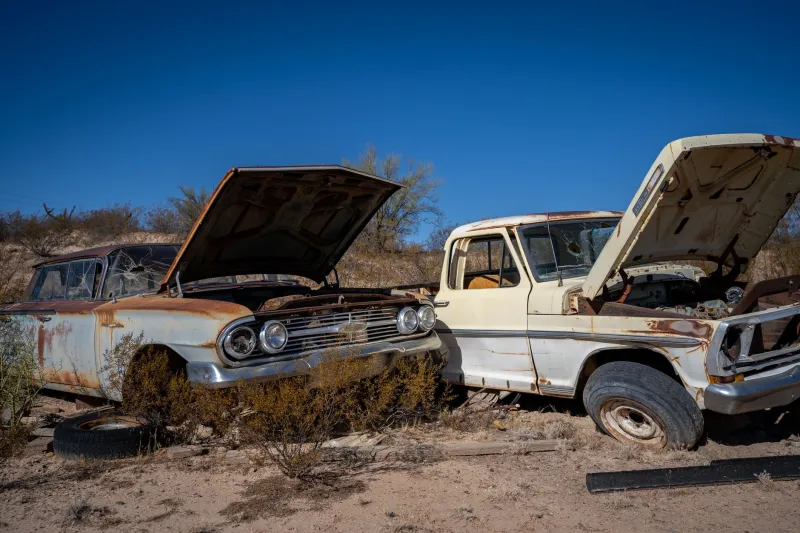
The cars are still out there. They're sitting in storage units, behind rural properties, in the back corners of old dealership lots. The difference between one of them reaching a serious caretaker and ending up as scrap metal often comes down to whether the right person found out in time.
These clubs are making sure that happens more often than not. And out here in the West, that's something worth paying attention to.