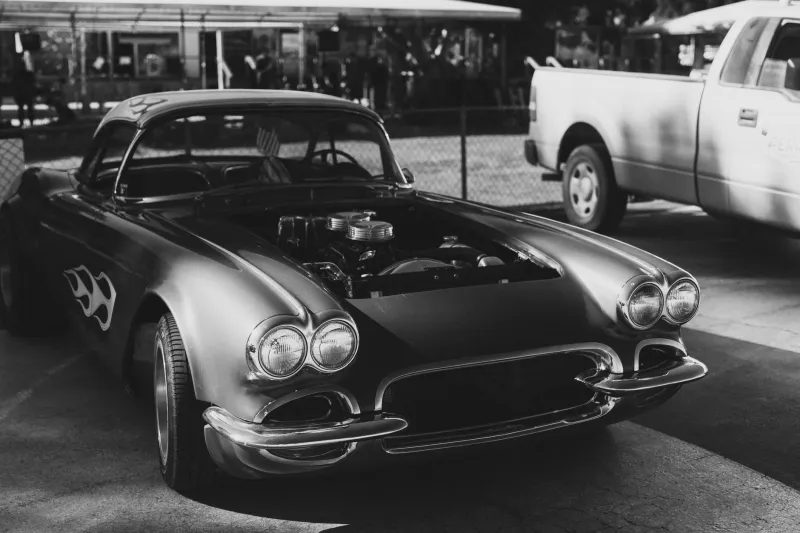
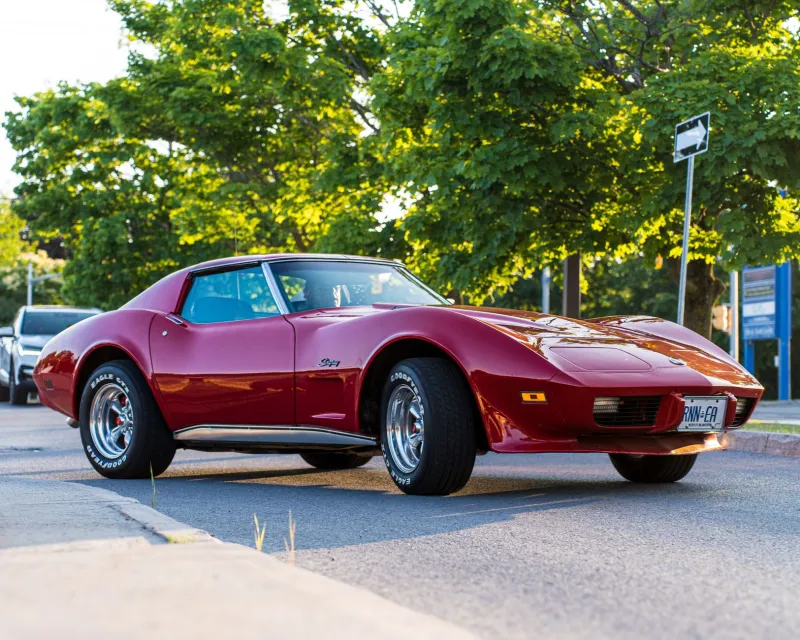
Two Corvettes, One Spouse, Zero Garage Space: The Collector's Balancing Act Nobody Talks About
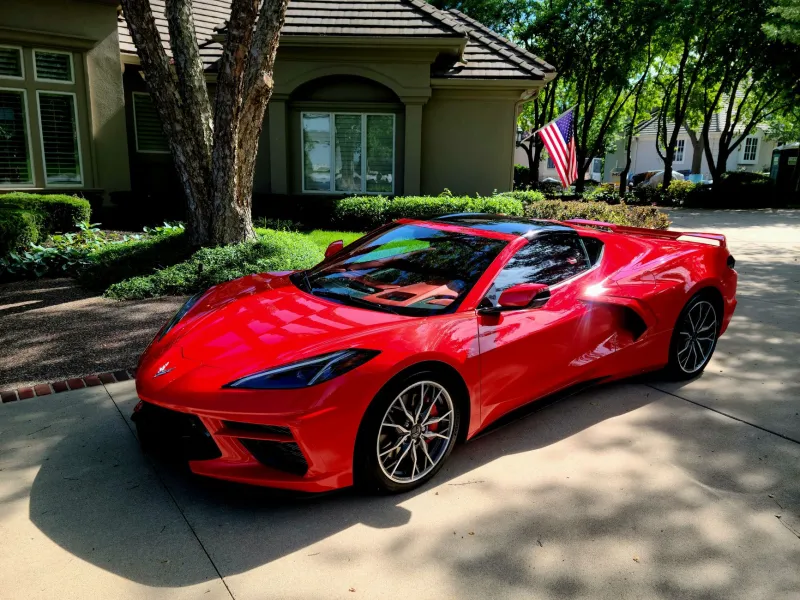
There's a moment every Corvette collector knows. You're scrolling through a listing at 11 p.m., and there it is — a 1969 Stingray in Fathom Green, barn-fresh, priced just low enough to hurt. Your pulse goes up. Your brain starts doing math. And then, somewhere from down the hallway, you hear your spouse ask what you're doing.
You close the laptop. You know the math doesn't add up. But you open it back up anyway.
This is the collector's dilemma — not the car itself, but everything that comes with wanting it. The space. The money. The conversation you've been avoiding. If you've been in the Corvette world long enough, you've either lived this story or you know someone who has. Probably both.
The Problem Isn't the Car. It's the Third Car.
Most collectors will tell you the first Corvette was easy. Maybe the second, too. But somewhere around the third or fourth acquisition, the whole enterprise starts to strain at the seams — of the garage, the budget, and occasionally the relationship.
Dave Kowalski, a collector based outside of Phoenix, Arizona, has owned eleven Corvettes over the past two decades. Right now he's sitting on four. "The first two, my wife was actually excited," he says. "She'd come out to the garage with me, ask questions. By number three, she started calling it 'the situation.' By number four, she had a spreadsheet."
The spreadsheet, as it turned out, was a turning point — not a bad one. "She wasn't trying to shut me down. She was trying to understand it. Once I could show her what we had, what we'd spent, and what things were actually worth, it became a real conversation instead of just an argument."
That shift — from emotional standoff to practical dialogue — is something that comes up again and again when you talk to long-term collectors.
The Garage Space Problem Is Real and It Is Ruthless
Square footage is the great equalizer. Doesn't matter how much you love a car if there's nowhere to put it. And unlike the financial side of collecting, which can flex and bend, physical space is brutally fixed.
The standard two-car garage holds, well, two cars. Maybe two and a motorcycle if you're creative with your parking angles. But serious collectors inevitably start looking at options: detached garage builds, rented storage units, climate-controlled facilities, even buying adjacent lots.
Lorraine Hutchins, who collects alongside her husband in the Central Valley of California, laughs when she talks about how their "little hobby garage" turned into a 1,400-square-foot addition to their property. "We kept saying, 'just one more and we'll figure it out.' We figured it out four times."
For collectors who don't have the land or the budget to build, commercial storage is the most common solution — though it comes with its own complications. Climate control matters enormously for fiberglass and interiors. Security matters. Access matters if you actually want to drive the things. Monthly fees add up fast, and before long you're spending more on storage than some people spend on car payments.
The calculus gets complicated quickly. One collector we spoke with estimated he was spending close to $800 a month across two different storage facilities. "At some point you have to ask yourself if you're a collector or a storage unit manager," he said, only half-joking.
Having the Conversation (Without Losing the Car or the Spouse)
If there's a universal piece of advice that collectors give each other about the domestic side of this hobby, it's this: don't ambush your partner.
Rolling a new acquisition into the driveway and hoping for the best is a strategy that works exactly once, if you're lucky. After that, it tends to generate the kind of goodwill that takes months to rebuild.
The collectors who seem to make it work long-term are the ones who loop their partners in early — not to ask permission, exactly, but to make the decision feel shared rather than imposed. That means talking about the car before you've already mentally bought it. It means being honest about the real costs, including storage, insurance, and eventual restoration. And it means listening when your partner raises concerns, rather than treating every objection as an obstacle to route around.
"My husband knows that when I start researching a car, I'm going to bring it to him," says Patrice Odom, a C3 enthusiast from outside of Denver. "He's not always going to say yes. But he knows I'm not going to go around him either. That trust took years to build and it's worth more to me than any Corvette."
That said, it's not a one-sided negotiation. Partners of collectors have to be willing to engage with the hobby in good faith, too — to understand why a particular car matters, what it represents, and why the money spent on it isn't just money disappearing into a fiberglass sinkhole.
Creative Solutions That Actually Work
Beyond the relationship dynamics, there are practical strategies that help collectors manage the physical and financial reality of owning multiple cars.
Rotating ownership. Some collectors deliberately cycle through cars rather than accumulating indefinitely. Buy, enjoy, sell, repeat. It keeps the collection fresh, limits storage demands, and often means you're trading up over time.
Shared storage co-ops. A small but growing number of enthusiasts in major metro areas are going in together on shared garage or warehouse space. It splits the cost, creates community, and usually comes with built-in accountability — harder to let a car sit neglected when your friends are watching.
Establishing a "one in, one out" rule. Sounds simple. Is actually hard to follow. But collectors who stick to it tend to have more focused, higher-quality collections than those who just keep adding.
Being honest about project cars. A barn find that needs a full restoration isn't just a car — it's a years-long financial and time commitment. Counting it the same as a driver in your collection is a form of self-deception that creates real problems down the road.
The Math That Actually Matters
Here's the thing about the math that "doesn't add up" — sometimes it does, if you're honest about what you're counting. The value of the hobby isn't just in the cars. It's in the community, the craft, the weekends spent turning wrenches, the stories that accumulate around each vehicle.
Dave Kowalski put it simply: "My wife doesn't love the cars the way I do. But she loves what they do for me. Once I understood that, I stopped trying to convince her to be as obsessed as I am and started just including her in it more. Drives together. Car shows. Letting her pick which one we take to dinner. It changed everything."
The collectors who navigate this balancing act best aren't the ones with the biggest garages or the most patient spouses. They're the ones who've figured out that the hobby has to fit into a life — not the other way around.
That 1969 Stingray in Fathom Green will come around again. The question is whether you'll be in a position to enjoy it when it does.