What Those Numbers Actually Mean: A Collector's Guide to Cracking the Corvette VIN Code
Somewhere between the handshake and the wire transfer, every serious Corvette buyer faces the same moment of reckoning: you're staring at a car that looks right, sounds right, and smells like opportunity — but do the numbers check out? Because in this hobby, numbers are everything. They're the paper trail that separates a genuine, numbers-matching survivor from a cleverly assembled collection of parts wearing the wrong identity.
Learning to read a Corvette's VIN isn't just a party trick for concours judges. It's a practical skill that can save you tens of thousands of dollars and a whole lot of heartbreak. Let's break it down.
The VIN Itself: More Than Just a Serial Number
Prior to 1981, Corvette VINs were shorter and formatted differently than the standardized 17-character system the federal government mandated starting with the '81 model year. For early cars — your C1s, C2s, and C3s — the VIN is typically found on a small plate on the driver's side door pillar or dashboard. For C4s and beyond, you'll find the full 17-character VIN on the dash, visible through the windshield on the driver's side.
Here's what each section of a post-1981 Corvette VIN tells you:
- Position 1: Country of origin (1 = United States)
- Position 2: Manufacturer (G = General Motors)
- Position 3: Vehicle type
- Positions 4–8: Vehicle descriptor section — this is where body style, restraint systems, and engine codes live
- Position 9: Check digit (used to verify the VIN's mathematical validity)
- Position 10: Model year (each year gets a specific letter or number — for example, B = 1981, Y = 2000, 1 = 2001, and so on)
- Position 11: Assembly plant (5 = Bowling Green, Kentucky, for most modern Corvettes)
- Positions 12–17: Production sequence number
For pre-1981 cars, the format is simpler but the decoding process is just as meaningful. A 1967 Corvette VIN, for instance, encodes the model year, body style, and sequential production number in a much shorter string — but those digits still carry enormous authentication weight.
Why the Partial VINs Matter Just as Much
Here's where a lot of buyers stop short: they check the dashboard VIN and call it a day. But experienced collectors know the real verification work happens when you start cross-referencing the partial VINs stamped on the major components.
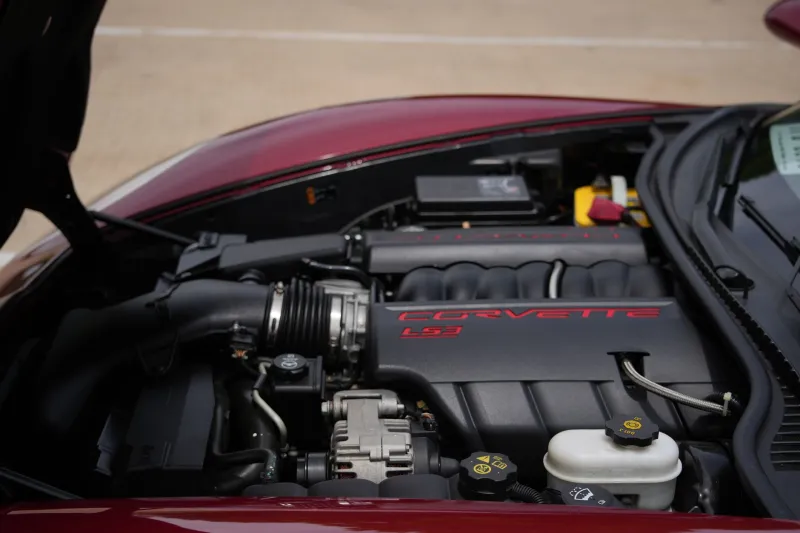
The engine, for example, carries its own partial VIN stamp. On most classic Corvettes, this is found on a pad machined into the block — typically near the front of the engine on the passenger side. That stamp should match the last several digits of the car's full VIN. If it doesn't, the engine has been swapped at some point. That's not automatically a dealbreaker, but it absolutely affects value and authenticity classification.
Same goes for the transmission, rear differential, and on some models, body panels. Matching numbers across all these components is the gold standard for serious collectors and concours-level restorations.
Decoding the Build Sheet and Trim Tag
The VIN tells you what the car is. The build sheet and trim tag tell you what it was born with.
Build sheets — often called broadcast sheets — were factory documents that traveled with each Corvette down the assembly line at Bowling Green (or St. Louis, for older cars). They listed every option, color code, and specification for that individual unit. These sheets were sometimes tucked under seats, stuffed behind panels, or left in door jambs. Finding one with a barn find or estate sale car is like discovering a birth certificate — it's direct documentary evidence of original configuration.
The trim tag, a metal plate usually found in the door jamb or on the firewall depending on the generation, encodes the paint color, interior color, and build date. That build date is particularly useful. A car stamped as being built in, say, early November of a given model year was likely assembled near the start of the production run — which can sometimes correlate with early-production anomalies, pilot cars, or pre-production specifications that make certain units more collectible.
Spotting Fakes and Franken-Vettes
The sad reality of a high-value collector car market is that fraud follows the money. Corvettes are no exception. The most common scams involve taking a base model and re-stamping or swapping components to make it appear to be a higher-value variant — an L88, a ZR-1, a rare color combination, or a documented low-production unit.
Red flags to watch for:
- Restamped VIN plates that show signs of removal and reinstallation (look for misaligned rivets, fresh paint over the plate area, or inconsistent font depth)
- Engine stamps that look too clean on a car claimed to be unrestored
- Mismatched date codes on components — a carburetor dated after the car's build date is physically impossible on an original car
- Option codes that don't add up — if a car is claimed to have a specific rare package, every verifiable component associated with that package should be present and date-correct
When in doubt, Corvette authentication resources like the National Corvette Restorers Society (NCRS) and the Bloomington Gold certification program offer formal documentation and inspection services. For high-dollar acquisitions, hiring a certified Corvette appraiser to do a pre-purchase inspection is money extremely well spent.
Using VIN Data to Gauge Market Value
Beyond authenticity, VIN and production code data can directly influence what a car is worth on the open market. Low production sequence numbers, rare option code combinations, and documented first-day or last-day builds can all push values meaningfully higher. Some buyers specifically seek out cars built on significant calendar dates, or units that were among the first or last of a particular generation.
On the flip side, a car with a mismatched engine — even if it's disclosed and the car is otherwise solid — will typically trade at a discount compared to a numbers-matching example in similar condition. Understanding where a specific car lands on that spectrum lets you negotiate from a position of knowledge rather than hope.
Do the Homework Before You Sign Anything
The Corvette market out West has been on fire for years, and that enthusiasm has attracted both legitimate sellers and opportunists looking to move questionable cars to buyers who don't ask enough questions. Whether you're shopping a barn find in the Central Valley, a restored show car in Scottsdale, or a survivor-grade C3 from an estate sale in New Mexico, the VIN is your first line of defense.
Take the time to learn the decoding system for the specific generation you're chasing. Cross-reference what you find with known production records and registry databases. And never let the excitement of a great-looking car override the discipline of verifying what the numbers actually say.
Because out here, the best Corvette deal isn't the one that looks the most impressive in photos — it's the one where every digit checks out.