Why the Prettiest Corvette in the Room Can't Find a Date
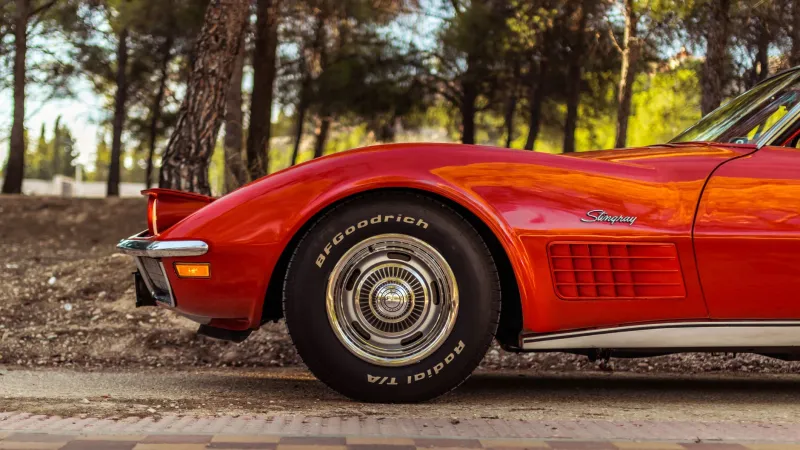
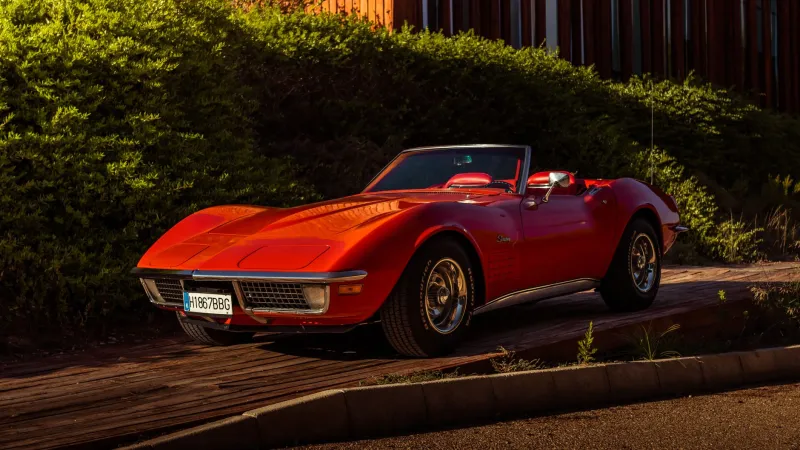
Scroll through the listings on any given weekend — here on our marketplace, on the auction sites, in the club newsletters — and a pattern starts to emerge that doesn't quite make sense on paper. A meticulously restored 1969 Corvette, every nut and bolt documented, fresh paint in the original Fathom Green, asking a fair price for the work that went into it? Sitting. Weeks, sometimes months. Meanwhile, a rough 1972 with surface rust, a tired small-block, and a title that reads "as-is" gets three serious inquiries before the listing even hits 48 hours.
What's going on?
It's not a fluke. Talk to enough dealers, private sellers, and longtime collectors and you'll hear the same story repeated in different zip codes. The market for Corvettes — especially the classic C2s and C3s — has developed a strange and genuine preference for the imperfect. And understanding why matters whether you're buying, selling, or just trying to figure out where to put your money.
The Overcorrection Problem
Here's the dirty secret about high-end restorations: they can be too good. Not in a bragging way — genuinely, structurally too good for what the average buyer actually wants to do with the car.
When someone drops $60,000 or $80,000 into a frame-off restoration, they're chasing an ideal. And the result is often a car so perfect that it becomes essentially undrivable in a practical sense. Take it to a show, sure. But park it next to someone's daily driver at a Cars & Coffee? Every door ding becomes a crisis. Every stone chip is a personal tragedy.
Buyers know this. They look at a concours-level restoration and they don't see a car — they see a responsibility. They see insurance riders and climate-controlled storage and a hobby that's stopped being fun and started being maintenance. That's not what most people got into Corvettes for.
What "Character" Actually Means to a Collector
There's a word that gets thrown around a lot in collector circles: character. It sounds like a polite way to say "flawed," but it means something more specific than that.
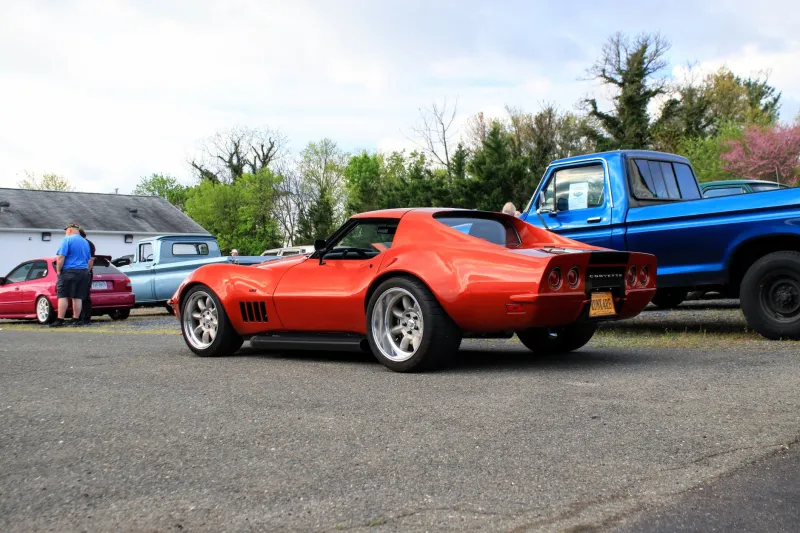
A Corvette with character has a story you can read in the bodywork. Maybe the interior shows wear in exactly the right places — the driver's bolster a little cracked, the steering wheel worn smooth where hands have gripped it for decades. Maybe the paint has a respray somewhere in its history that tells you this car was actually used, actually loved, actually driven. These aren't defects to a certain kind of collector. They're proof of life.
Project cars tap into something even deeper: the fantasy of ownership from the ground up. When you buy a rough Corvette, you're not just buying a car. You're buying a project, a journey, a version of yourself that knows what you're doing in a garage on a Saturday afternoon. The appeal is real and it's emotional, and emotion moves cars faster than condition reports.
The Appraisal Gap Nobody Talks About
There's also a practical side to this that doesn't get enough attention. When a seller prices a restored Corvette, they almost always price in the cost of the restoration — or at least, they try to. The problem is that the market rarely pays dollar-for-dollar on restoration costs. It never really has.
A buyer looking at a $75,000 restored C3 is doing math in their head. They're thinking: I could buy a solid driver-quality example for $35,000, put $20,000 of my own work into it, end up with something I actually know top to bottom, and still come out ahead. That math isn't always accurate, but the logic is compelling enough that it shapes behavior.
The project car, by contrast, has no restoration premium baked in. The price reflects the car's current state, not someone else's vision of what it should be. Buyers feel like they're getting in at the ground floor. Whether or not that's financially true, it feels like a better deal — and in a market driven by enthusiasm, feelings matter.
Regional Tastes Play a Role Too
Out here in the West, there's an added layer. The dry climate means rust is less of a deal-breaker than it would be in the Midwest or up in the Pacific Northwest. A car that would be a parts-only proposition in Ohio might be a legitimate driver project in Arizona or Southern California. That shifts the calculus on project cars considerably.
Western collectors also tend to skew toward cars they can actually use — canyon runs, coastal cruises, weekend rallies. A show-only restoration doesn't fit that lifestyle as naturally. The culture here rewards cars that move, not cars that sit under a cover waiting for the next judged event.
So What Should Sellers Do?
If you've got a beautifully restored Corvette and you're wondering why the phone isn't ringing, the answer probably isn't the price — or at least, not entirely. It's the presentation.
The most successful sellers of high-end restorations reframe what they're selling. They don't just lead with condition; they lead with usability. Show the car being driven. Share photos from a road trip or a local show where it was actually in motion. Document not just what was restored, but why it can be enjoyed without anxiety. Make the buyer feel like they're getting a turnkey experience, not a museum piece.
And if your car is a project? Lean into it. Be honest about the flaws, specific about what's been done and what's left to do, and price it with enough room that the buyer can see their own labor reflected in the margin. Give them the story they want to tell.
The Market Knows What It Wants
The Corvette market has always been a little counterintuitive. Values zigzag in ways that confuse people coming from other collector car segments. But the project-versus-perfect paradox isn't really a mystery once you understand that most collectors aren't buying an object — they're buying an experience.
Sometimes that experience is the drive. Sometimes it's the build. Sometimes it's just the feeling of owning something real, something with history baked into its panels, something that doesn't need to be perfect to be worth loving.
The prettiest Corvette in the room will find its buyer eventually. But don't be surprised if the one with the patchy respray and the rebuilt carb is long gone before it does.