Under the Hood and Into the Deep End: Real Corvette Owners Share Their Most Radical Engine Swaps
There's a moment every Corvette builder knows. You've got the original engine out, the engine bay is bare, and you're standing there holding a cup of cold coffee staring at a project that has officially become real. The decision you made weeks ago — the one that seemed so logical when you were browsing forums at midnight — is now a commitment measured in labor hours, parts orders, and your significant other's patience.
Engine swaps are the great divider in the Corvette community. Some purists won't hear of it. But for a growing number of builders, a well-executed powerplant upgrade is the difference between a car that sits in a garage being admired and one that actually gets driven hard and loved the way these machines were meant to be.
We talked to owners across the country — and pulled from the broader community conversation — to put together an honest look at what the most popular Corvette engine swaps actually involve, what they cost, and whether the results live up to the hype.
The LS Swap: Still the King, and for Good Reason
If you spend any time in Corvette forums or at regional car shows, you already know that GM's LS family of engines has become the default answer to almost every performance question. And honestly? The reputation is earned.
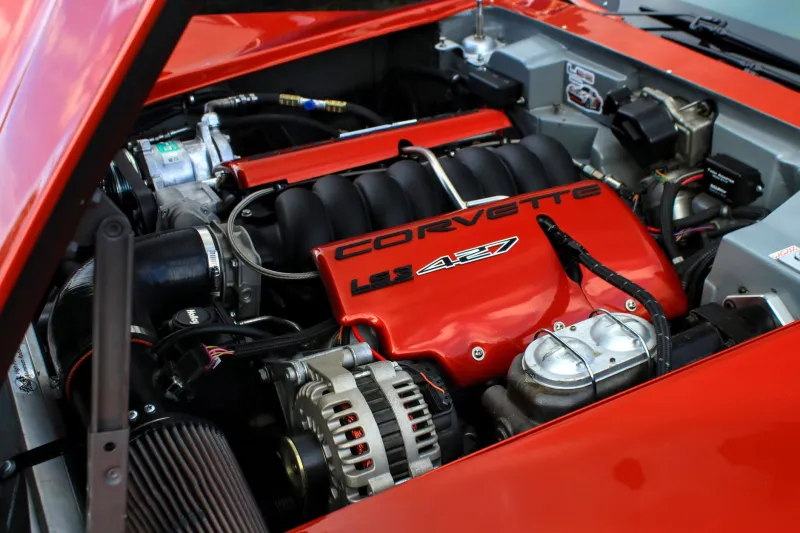
LS engines are compact, extraordinarily well-supported by the aftermarket, relatively affordable to source from wrecked trucks and SUVs, and capable of making serious power without exotic tuning. An LS3 — the 6.2-liter unit that powered C6 Corvettes — can be had for $3,000 to $6,000 as a pull-out, and with basic bolt-ons it'll reliably produce 450-plus horsepower.
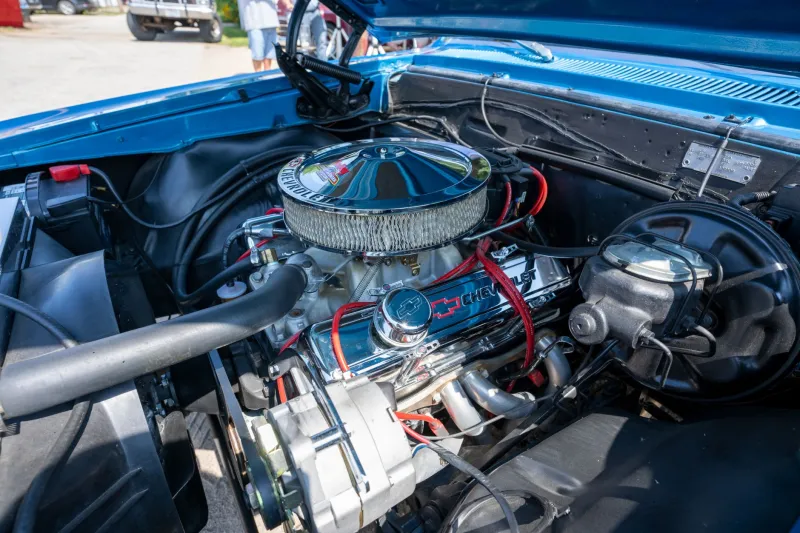
For C3 Corvette owners in particular, the LS swap has become almost a rite of passage. The engine bay dimensions work well, adapter kits are widely available, and the performance leap from a tired 350 small-block to a healthy LS is immediately and dramatically noticeable.
Real owner take: Marcus T., a builder out of Denver, swapped an LS3 into his 1975 Stingray last year. Total cost including a T56 six-speed transmission, mounts, headers, and a custom tune came to roughly $11,500 in parts. Labor was another $4,000 through a local shop. "It drives like a different car," he told us. "Not a different kind of car — a completely different car. It's intoxicating."
Going Forced: Turbo and Supercharger Builds
Naturally aspirated swaps get a lot of attention, but the builders chasing truly outrageous numbers are increasingly going forced induction. A turbocharged LS or LT engine in a C4 or C5 Corvette is a genuinely terrifying thing in the best possible way.
Procharged and Magnuson supercharger kits designed around LS platforms are popular for their bolt-on accessibility — no custom fabrication required for most applications. A centrifugal supercharger on an LS3 can push output past 600 horsepower without touching internal engine components, assuming your fuel system and cooling are up to the task.
Turbo builds are more complex but offer greater flexibility in power targeting. Single-turbo setups on built LS engines are producing 700, 800, even 900 horsepower in Corvette chassis that were never designed to handle anything close to those figures — which creates its own set of engineering challenges around brakes, suspension, and driveshaft integrity.
Cost reality check: A serious turbocharged build — engine, turbo kit, fuel system upgrade, transmission, tuning — can run $20,000 to $35,000 in parts alone before you factor in labor. These are not casual weekend projects. They're commitments.
The Authenticity Question
Here's where it gets philosophical. If you swap the engine out of a numbers-matching 1969 Corvette, what exactly do you have?
The honest answer is: a car that will drive better, cost less to maintain, and bring you more joy on a Saturday morning — but will also be worth less to a certain category of collector. Numbers-matching, documented Corvettes carry a premium that engine swaps permanently eliminate.
For high-optioned, low-production models — COPO cars, ZL1 applications, big-block convertibles — keeping the original drivetrain intact is almost always the financially correct decision, even if the engine needs a full rebuild. The collectibility premium on those cars is real and significant.
For a base-model C3 or a driver-grade C4, the calculus changes entirely. If the original engine is tired, the car isn't a museum piece, and you intend to actually drive it, a well-executed swap can add enjoyment without meaningfully destroying investment value.
LT Swaps: The Next Frontier
While LS swaps are mature and well-understood, GM's newer LT family — the direct-injected, variable-valve-timing architecture powering current Corvettes — is starting to attract serious builder attention. LT1 and LT4 engines from C7 Corvettes offer modern efficiency, robust power output, and a performance ceiling that LS platforms approach only with significant modification.
The catch is complexity. Direct injection requires high-pressure fuel systems that are more involved to integrate into older chassis. Wiring harnesses are more elaborate. But as C7 parts become more available through insurance salvage and high-mileage trade-ins, LT swap costs are dropping and the knowledge base is expanding rapidly.
Expect LT swaps to be the dominant conversation in Corvette build circles within the next three to five years.
Before You Pull the Trigger
A few things worth considering before you commit:
- Document everything before and during the swap. Keeping the original engine, even if it never goes back in the car, preserves future options.
- Budget 20% more than your estimate. It's a cliché because it's true. There are always surprises.
- Find a builder or shop that has done this specific swap before. Experience with Corvette chassis matters.
- Think about your end goal. A track car, a weekend driver, and a show car have genuinely different requirements — and the right swap for one might be wrong for another.
Engine swaps aren't for everyone. But for the builders willing to go deep, the payoff is a Corvette that performs exactly the way you imagined it could — which is a feeling that's pretty hard to put a price on.